LED vs Non-Illuminated Signs: The Real 5-Year Cost Nobody Talks About
The Hidden Costs of Stainless Steel Letters: Why 'Classic' Isn't Always Cheaper
Stainless steel letters look timeless, but the real cost of "classic" can surprise you. A 3mm thick stainless steel letter can cost up to 40% more than the same size in aluminum. Over five years, that adds up. Installation is another factor. TIG welding and finishing can add a meaningful amount per letter. Stainless steel letters also need regular cleaning or polishing to prevent corrosion, and that maintenance adds up over time. Metal fabrication labor rates tend to run 10-20% higher as well. So while stainless steel letters are the "classic" choice, they are not always the most cost-effective.
LED Sign Lifespan: Fact vs. Fiction in the Sign Industry
LED signs are often called the longest-lasting option, but the truth is more complicated. The industry standard lifespan for LED chips is 50,000 hours, but quality matters. Budget LED signs might only last 12-18 months, while high-quality modules from Samsung or Osram can exceed 5 years. The difference? Quality components. Don't be swayed by the cheapest price tag; it often hides a shorter lifespan. And while LED signs might not need frequent replacements, they do require occasional maintenance to keep them working as they should. A few hours of maintenance every year can keep your LED sign looking right.
Non-Illuminated vs. LED: Energy Consumption and Utility Bills
Energy is a real cost factor with signage. Non-illuminated signs, like
channel letters without internal LED modules or dimensional letters, are much cheaper to run. They consume almost no electricity, which can save you money on utility bills. But LED signs? LED modules are typically rated at 100-150 lm/W, but over five years the power use still adds up, especially for larger signs. Factor in maintenance and higher electricity rates, and LED signs might not be as cheap to run as people assume.
The Real-World Durability Test: Weathering the Elements
LED signs generally hold up better in harsh weather. Stainless steel 304 has an outdoor life of over 10 years, while stainless steel 316, marine grade for coastal or industrial settings, lasts 15+ years. This is due to the high chromium (Cr) and nickel (Ni) content in 304 and the added molybdenum (Mo) in 316, making them corrosion-resistant. Acrylic, while lighter and more versatile, has a UV-resistant lifespan of 5-8 years before it starts to yellow. This means LED signs, especially those with high-quality Samsung/Osram/Blueview modules that have a real lifespan of 5+ years, can outlast many non-illuminated options. A 10-year lifespan for
metal signs versus a 5-year lifespan for acrylic signs — that's a real-world difference that adds up over the years.
Maintenance and Upkeep: The Long-Term Care of Signage
Maintaining signage is often overlooked, but it matters for long-term costs. LED signs require minimal upkeep. The neutral silicone used for sealing the LED modules can last 8-12 years without needing to be replaced. Acrylic signs might need repainting after 1-2 years if they are not UV-resistant, and stainless steel letters might require polishing to maintain their shine, more often if they are not powder coated or anodized.
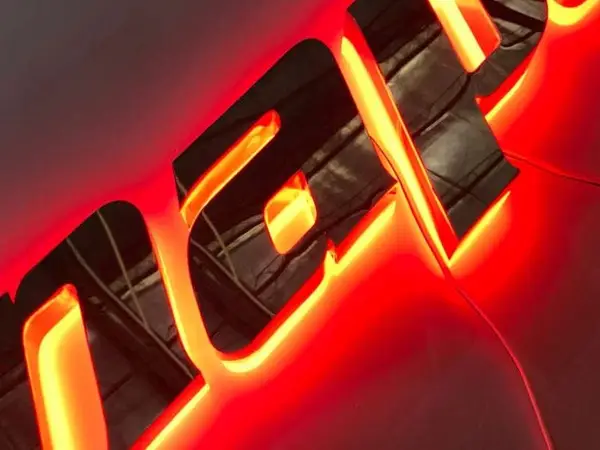
Neon signs, while having a 10+ year lifespan, can be a headache because they need ongoing maintenance and can leak gas, which is a safety hazard. LED signs are easier to maintain due to lower energy consumption and fewer points of failure. That's why LED signs, despite their higher upfront cost, can end up being the more economical choice over a 5-year period.
Return on Investment: LED vs. Non-Illuminated Signs Over Five Years
Let's talk ROI. Over five years, LED signs have a clear edge. LED signs last longer, so you won't be replacing them as often. Quality modules from Samsung or Osram can last 5+ years, while cheap ones might only last 12-18 months. That's a big difference. Plus, they're more energy-efficient. SMD 2835 LEDs are the industry standard, offering 100-150 lm/W. Non-illuminated acrylic signs can yellow or need repainting after a few years. Over five years, that's a lot of savings in materials and labor.
Now, let's look at the upfront cost. Factory prices for LED signs are about $20-80 per letter, compared to $15-40 for non-illuminated letters. But remember, LED signs also need a power supply, which is a one-time cost. A good power supply can last for years, while a cheap one can fail early. So while the initial cost might be higher, the long-term savings in maintenance and replacement are significant. And don't forget, LED signs are more versatile. They can be used both indoors and outdoors, while many non-illuminated signs are mostly for indoor use.
Then there's the energy cost. LED signs use less energy than traditional neon signs, often up to 60% less. Over five years, that's real savings. Plus, they're better for the environment. Neon signs contain harmful gases like mercury, which are bad for the planet. LED signs are recyclable and have a lower carbon footprint. So when you're crunching the numbers, don't just look at the initial cost. Factor in longevity, energy efficiency, and environmental impact. In the end, LED signs usually offer a better return on investment over five years.
The Real Impact of Color Temperature on Brand Perception
You know, color temperature in signage isn't just about what looks good under the lights. It changes how customers read your brand. Warm colors like 3000-3500K work well for hospitality, making diners feel cozy and welcomed. Neutral 4000-5000K is the usual choice for corporate and retail; it's clean and modern. Cool 6000-6500K is common for industrial and highway signs because it's bold and stands out. But here's the honest truth: a client once went for the cheapest color temperature, thinking it would save money. They ended up with a sign that looked old before its time. Brand perception? Damaged. Lesson learned: the right color temperature can make or break a sign's effectiveness. And it's not just about looks; it's about the message you're sending to your customers.